
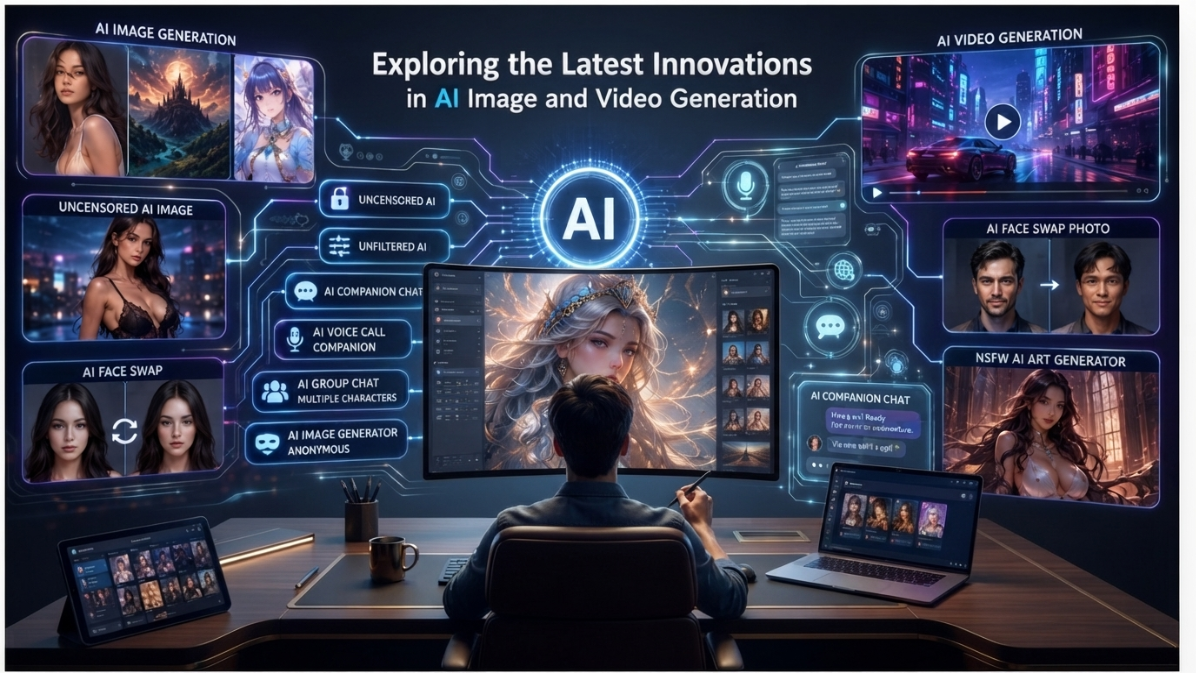
Artificial intelligence has become an essential part of digital creativity, helping individuals and businesses produce content faster than ever before. From generating artwork and editing videos to creating interactive conversations, modern AI platforms continue to reshape how creators work. In 2026, one trend stands out above the rest: users increasingly prefer flexible AI platforms that provide greater creative control, stronger privacy options, and a broader range of tools.
Rather than relying on rigid, one-size-fits-all systems, creators now look for platforms that adapt to different workflows, creative goals, and industries. Whether producing digital illustrations, marketing visuals, educational content, storytelling assets, or interactive experiences, flexibility has become a deciding factor.
Platforms such as NoCensor AI reflect this shift by offering a collection of AI-powered creative tools designed for users who value customization, speed, and control over their projects.
Table of Contents
ToggleThe Evolution of AI Creativity
Just a few years ago, AI tools primarily focused on writing text or generating simple images. Today, creators expect far more.
Modern AI solutions can assist with:
- Image generation
- Video creation
- Voice synthesis
- Conversational assistants
- Character development
- Face replacement for creative projects
- Multi-character interactions
- Workflow automation
Instead of switching between multiple applications, many creators prefer integrated platforms that combine several capabilities within a single ecosystem.
This streamlined experience saves time while encouraging experimentation.
Why Flexibility Matters More Than Ever
Creative work rarely follows a fixed process.
A graphic designer may need AI-generated concept art one day and video editing assistance the next. A game developer might require dialogue generation alongside environment illustrations. Content creators often produce blog graphics, social media visuals, voice clips, and promotional videos within the same project.
Flexible AI platforms support these changing needs by offering diverse tools instead of limiting users to one function.
Benefits include:
- Faster production
- Easier collaboration
- Consistent creative workflow
- Reduced software costs
- Greater creative freedom
As digital competition continues to grow, creators appreciate platforms that evolve alongside their projects.
AI Image Generation Has Become More Advanced
One of the biggest developments in 2026 is the quality of AI-generated images.
Modern image generators understand:
- Lighting
- Composition
- Color harmony
- Perspective
- Artistic styles
- Character consistency
Many users now seek an AI image generator no restrictions when working on legitimate creative projects that require greater stylistic freedom while remaining responsible and compliant with applicable laws and platform policies.
Instead of forcing creators into narrow templates, flexible platforms allow more personalized prompts and artistic exploration.
This has made AI-generated visuals increasingly valuable for:
- Marketing campaigns
- Book illustrations
- Website graphics
- Product concepts
- Game assets
- Storyboarding
- Digital art
Privacy Is Becoming a Major Priority
Privacy concerns continue to influence platform selection.
Many creators work on confidential business ideas, unpublished books, commercial artwork, or client campaigns.
An AI image generator with an anonymous option can be attractive for users who want additional privacy when experimenting with concepts or protecting sensitive creative work.
This growing demand has encouraged AI providers to improve account security, privacy controls, and data transparency.
Trust has become just as important as performance.
AI Video Tools Continue to Improve
Video production once required expensive software and significant editing experience.
Today, AI simplifies many production tasks.
Creators use AI for:
- Storyboarding
- Animation
- Voice synchronization
- Motion enhancement
- Scene generation
- Editing assistance
An uncensored AI video generator can refer to platforms that provide broader creative flexibility compared with heavily restricted systems, while still expecting users to follow legal requirements and community standards.
Similarly, an uncensored AI video workflow appeals to filmmakers, educators, advertisers, and independent creators seeking fewer unnecessary creative limitations for legitimate projects.
AI Face Swap Technology Is Expanding
Another rapidly evolving area is AI face swap technology.
Modern systems have become remarkably realistic while offering useful applications in:
- Film production
- Advertising
- Historical recreations
- Educational demonstrations
- Entertainment
- Creative storytelling
Many creators also use AI face swap photo tools during concept development, character visualization, or digital art projects.
Responsible use remains essential, particularly regarding consent, privacy, and intellectual property.
AI Companion Experiences Are Becoming Smarter
Conversational AI has advanced significantly.
Instead of answering simple questions, modern assistants maintain context across long conversations and adapt their responses to different communication styles.
Many users now appreciate features such as:
- AI companion chat
- AI voice call companion
- AI group chats with multiple characters.
These innovations create more immersive experiences for writers, educators, role-playing communities, customer support teams, and productivity enthusiasts.
Writers, for example, can brainstorm dialogue between fictional characters without constantly switching prompts.
The Rise of Customizable AI Conversations
Traditional chatbots often rely on strict predefined responses.
Flexible AI platforms instead focus on customization.
Users increasingly value:
- Adjustable personalities
- Long-term memory
- Character consistency
- Creative brainstorming
- Role-specific assistants
- Multi-turn conversations
This has contributed to growing interest in uncensored AI chat, where users seek fewer unnecessary conversational restrictions while still expecting systems to encourage responsible and lawful use.
One Platform, Multiple Creative Tools
The biggest advantage of flexible AI ecosystems is integration.
Instead of maintaining numerous subscriptions, creators increasingly prefer platforms that combine multiple AI capabilities.
These may include:
- Text generation
- Image creation
- Video assistance
- Voice synthesis
- Character interactions
- Visual editing
- Workflow management
This unified approach improves productivity and reduces friction throughout the creative process.
Supporting Different Creative Industries
Flexible AI solutions now serve professionals across many fields.
Digital Artists
Artists use AI for concept sketches, color studies, composition ideas, and creative inspiration.
Marketing Teams
Marketing professionals rapidly generate advertising concepts, promotional visuals, product mockups, and campaign assets.
Writers
Authors develop characters, outline stories, create fictional conversations, and visualize scenes.
Game Developers
Studios accelerate asset production, dialogue generation, and world-building.
Educators
Teachers create visual learning materials and interactive educational experiences.
The ability to adapt across industries explains why demand for flexible AI platforms continues to rise.
Balancing Freedom with Responsibility
As AI capabilities expand, responsible development becomes increasingly important.
The most successful platforms strive to balance creative flexibility with safeguards against misuse. This includes respecting intellectual property, protecting privacy, encouraging consent, and complying with applicable laws.
Creators generally prefer systems that support legitimate creative expression without imposing unnecessary barriers, while still promoting ethical use.
Why Creators Appreciate NoCensor AI
As expectations evolve, creators increasingly evaluate AI platforms based on the overall experience rather than a single feature.
NoCensor AI offers an ecosystem that supports a wide range of creative workflows, bringing together capabilities for image creation, video generation, conversational AI, voice interactions, and other creative tools within one platform.
Its emphasis on flexibility appeals to creators who want greater control over their projects instead of rigid limitations. Whether exploring visual concepts, developing interactive characters, experimenting with AI-assisted media, or streamlining production workflows, users benefit from having multiple creative technologies available in one place.
For many professionals, this integrated approach reduces complexity while encouraging innovation and experimentation.
The Future of Flexible AI
Looking ahead, AI platforms are expected to become even more adaptive.
Future improvements may include:
- Better multimodal understanding
- Real-time collaboration
- Personalized creative assistants
- Improved voice interaction
- More realistic video generation
- Smarter workflow automation
- Enhanced privacy controls
- Greater customization options
Rather than replacing human creativity, these advancements will continue supporting creators by removing repetitive tasks and accelerating idea development.
Frequently Asked Questions
What is a flexible AI platform?
A flexible AI platform combines multiple AI capabilities—such as text, images, video, voice, and conversational tools—while allowing users to customize their workflows for different creative needs.
Why are creators using AI more frequently in 2026?
AI helps reduce production time, improve efficiency, generate creative ideas, automate repetitive tasks, and support content creation across many industries.
How is AI changing digital content creation?
Modern AI assists with brainstorming, visual design, editing, storytelling, voice generation, and collaboration, enabling creators to produce high-quality content more efficiently.
What industries benefit most from flexible AI tools?
Marketing, education, software development, publishing, entertainment, design, gaming, and digital media are among the industries seeing significant benefits from adaptable AI platforms.
Why is privacy important when choosing an AI platform?
Many creators work with confidential ideas or client projects. Strong privacy practices and transparent data handling help protect creative work and build user trust.
Conclusion
Artificial intelligence has entered a new phase where flexibility, integration, and user control matter as much as raw performance. Creators no longer want isolated tools that solve only one problem—they prefer comprehensive platforms that can support diverse creative workflows while respecting privacy and encouraging responsible innovation.
As AI continues to evolve, platforms that combine image generation, video assistance, conversational experiences, voice capabilities, and customizable creative workflows are well positioned to meet the needs of professionals and enthusiasts alike. This shift explains why more creators are choosing flexible AI platforms in 2026 and why integrated solutions such as NoCensor AI continue to attract users looking for efficient, adaptable, and future-ready creative technology.
